

BHC Special Events/Announcements
My Town, My Story – A Community Archive You Can Build!
Tuesday, November 4 - December 31, 2025
11:45 pm - 11:30 pm
MTMS is a digital community archiving platform created to preserve your community’s history and highlight the voices that make it special. We value your perspective and your potential to shape Bridgeport’s history. Click the link to the MTMS page and upload material.
View details‘Candy Cane’ Smokestack Exhibit
Wednesday, November 5 - December 31, 2025
8:15 pm - 11:45 pm
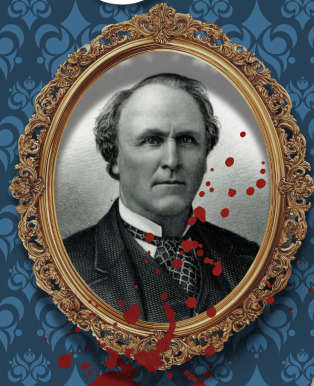
Come see a farewell tribute to Bridgeport’s iconic “Candy Cane” smokestack made by local artists and photographers, generously installed by City Lights Gallery on the 3rd floor of the Burroughs-Saden Library.
View details
BHC News
BHC x CTDA: Bridgeport’s history, now more searchable than ever
Find BHC Materials ONLINE
The Bridgeport History Center has been a proud part of the Connecticut Digital Archive for years now, taking advantage of this unique digital preservation platform that invites cultural institutions from all around Connecticut to share digitized material. Since March of 2020, BHC has worked hard to take advantage of CTDA’s hosting, search features, and support in order to make more of it’s holdings available and easier to search.
BHC is proud to share its updated CTDA space. Explore Black Bridgeport. Get to know our Archives and Manuscripts better. Did you know we have yearbooks digitized? All of our Grassroots Historians articles are available too, along with postcards and Mary Witkowski’s newspaper articles. You can search within the Bridgeport History Center’s collections only, or expand it to all of CTDA in order to find more material.
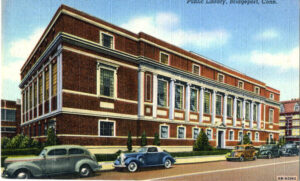
New and Noteworthy at BHC
The Bridgeport History Center updates our new and noteworthy page on a regular basis! Check back to see what we’ve added and you can come in and use. This page was last updated on April 22, 2022.
New Oral Histories
Bridgeport and New Haven Puerto Rican Oral Histories, 2023-2024
Fifth year Yale University doctoral candidate Amanda Rivera conducts oral histories to facilitate her research on the bilingual education movement in Bridgeport as led by Puerto Ricans in the 1970s. Rivera interviews community members about this topic in both Bridgeport and New Haven from 2023-2024. The interviews she conducted are now part of the History Center holdings as an oral history collection.
New Special Collections
BHC has long held biographical newspaper clipping files. Now researchers can view the list of names included in this substantial collection.
New Photographs
BHC has been continuing to add photographs to the Connecticut Digital Archive. There are over one thousand images available, with more on the way! Don’t see what you’re looking for? Contact us on our contact form.
New Digital Collections
BHC has one of the best newspaper clippings collections in the state. Explore some of the initial offerings from this vast resource.
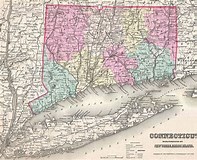
Maps online!
Plat maps with details of lot apportionments and street details for cities across the United States
Maps with details on buildings prepared for the insurance industry
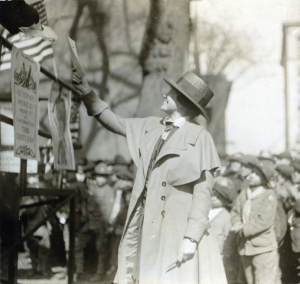
New Research Guides
Hot off the heels of finishing up the Records of the Warner Brothers Company, the Bridgeport History Center is pleased to present not one, not two, but three brand new research guides! Our women’s suffrage guide will help you celebrate a century of voting rights, the belatedly spooky guide to local witchcraft and hauntings will provide a different kind of January chill, and our comprehensive guide to material related to the Warner Brothers Company and the family will assist researchers who are keen to know more about one of Bridgeport’s biggest manufacturers.
BHC Events & Regular Monthly Programming
‘Candy Cane’ Smokestack Exhibit
Wednesday, November 5 - December 31, 2025
8:15 pm - 11:45 pm
View detailsFeatured Articles
The New Bridgeporters: Men of Maplewood and Growth of a Community
By Abraham Lima
This is Part 3 of a 5 Part Series at the Bridgeport History Center:
To read the previous articles, use the guide below to navigate.
- Part 1 “En El Principio, Los Mojados en USA” and “What are Tortillas?” https://bportlibrary.org/hc/hispanic-populations-and-culture/when-the-aztec-eagle-began-her-soar-over-bridgeport-part-1/
- Part 2 – “From Puebla York, Oaxakeepsie, and Mexchester” https://bportlibrary.org/hc/business-and-commerce/when-the-aztec-eagle-began-to-soar-over-bridgeport-part-2-from-puebla-york-oaxakeepsie-and-mexchester-2/
The New Bridgeporters: Men of Maplewood and Growth of a Community (more…)
When the Aztec Eagle Began to Soar Over Bridgeport: Part 2 – From “Puebla York”, “Oaxakeepsie” and “Mexchester”
When the Aztec Eagle Began to Soar Over Bridgeport: Part 2
by Abraham Lima
This is Part 2 of a 5 Part Series at the Bridgeport History Center:
- Part 1 “En El Principio”
- Part 2 – “From Puebla York, Oaxakeepsie and Mexchester
- Part 3 – “Men of Maplewood”
- Part 4 – “Miles y Miles Mas (Thousands and Thousands More)
- Part 5 – “The Eagle Soars”
For Part 1 click below: https://bportlibrary.org/hc/hispanic-populations-and-culture/when-the-aztec-eagle-began-her-soar-over-bridgeport-part-1/
How did Bridgeport’s Mexican community arise?
It came about with a few separate chance incidents.
A Few Early Arrivals: The Carmonas and the Solies
There were few Latinos in 1950s Bridgeport as the first wave of Puerto Ricans and Cubans was kickstarting. However, about a dozen or so Mexican individuals ended up in Bridgeport and integrated into that young Puerto Rican community.
One example is Guillermo Carmona, born 1921 in Tepeaca, Puebla, but grew up in Cholula, Puebla. He and his Dominican bride, Rhina Ligia Carmona, settled in Bridgeport on Iranistan Ave.
The son of an indigenous Mexican woman and a white Mexican man, he had an 8th grade education, higher than average for 1950s Mexico. Carmona later moved to Stratford with his wife and two sons, and in 1963 had a daughter, Maria Carmona.
Maria recalls “My dad and mom (a Dominican) moved to Bridgeport in July 1954. They went to Bridgeport because my dad had finally found the type of work he had wanted to find when he first arrived in the U.S. The place was Stanley Works, a steel mill [which later became Carpenter Steel]. My father had worked at a foundry in his hometown of Cholula, Puebla and, so, he was a skilled laborer. It took him about 8 years to find that work after living in New York City and working all kinds of jobs, learning English, figuring out how to make his way.”
The border (where most Mexican-Americans settled) was a question Maria slowly came to understand. Guillermo told her that he didn’t join the bracero program because heard that life for Mexicans in the southwest was hard. He had foundry skills and didn’t want to toil in the fields. “He figured that if he went further north, he’d be less likely to be treated as badly.”
His friend’s (El Gato) uncle was a merchant marine, and told his nephew, Guillermo and a friend (Heriberto Amaros) that there was work in New York. The 3 men set off for New York City, and later on to Bridgeport.
The reason he left, however, was because he was the head of the steelworkers union, and was receiving threats on his life for refusing brides. He only left to please his grandmother.

“My parents were very Catholic and were surprised that there was no Spanish-language Catholic mass in Bridgeport when they arrived. So, they got together with a few Spanish-speaking [mostly Puerto Rican]friends that they came to know and after a few years succeeded in getting the Diocese of Bridgeport to establish a “mission church”, Nuestra Señora de la Divina Providencia at St. Peter’s Church on Colorado Ave”, the patron saint of Puerto Rico.
“A few relatives from Puebla did join for short amounts of time, but they would end up settling in New York City and later New Jersey. Two of my aunts actually lived in New York and Bridgeport for a couple of years in the early days (in the 50s). One helped take care of my brother while my mom worked. She got her green card at that time (it was so easy to get them back then) and then she moved back to Mexico”.
There were hardly any Mexicans to be found anywhere, only Puerto Ricans and Cubans.
“ In fact, my dad and his Mexican friends would say they were it. If you can believe them, then there were four other Mexican families in all of Connecticut in the late 60s/early 70s!”
Maria said these were the families of two friends in Bridgeport, another friend in Wallingford, and El Gato, who Maria could not remember much about except his name. José Solis who was also from Mexico and married to an American woman. Heriberto Amaros, who had married a Portuguese immigrant, Natalia, and had a son.
Looking at familysearch.com records, it seems Jose Solis was from Chihuahua and married Anna, a Pennsylvanian tourist in Mexico. They lived in Philadelphia before moving to Bridgeport.
Carmona recalls that “Every summer for years all the Mexican families got together for a pig roast. I remember our doing one in Beardsley Park one year! Yes, they allowed that back then. Another memory is of the beautiful Indian Wells State Park. We did a few there. And the men would go to a farm to pick out and slaughter a pig! My dad, El Gato and Heriberto all played the guitar and I have very fond memories of hearing these men sing old-style Mexican trio during the evenings of those all afternoon and into the evening pig roasts.”
By the 1970 census, there were still only 24 Mexicans in Bridgeport. 7 were born in Mexico and 17 were American-born with at least 1 Mexican parent.
Comparatively, by 1972, 15% of Bridgeport’s population, about 25,000, were of Puerto Rican origin.
The Mexicans of the American Fabrics Company
NOT UNTIL THE 1970s did the first real wave of Mexicans to Bridgeport began, when Mexico City workers were contracted to work for the American Fabrics Company, a lace factory.
Lizeth Vibaldo, a Bridgeport Mexican, actually knows a first hand account of this. “A family friend from Mexico City was talking about his uncle who came in the 70’s to Bridgeport, brought as a laborer for a factory in Stratford, he said that a lot of Mexicans from Mexico City came with these working visas to work in that company.”
Unfortunately, the family friend did not remember the name of the company and did not want to speak further on the subject.
Thankfully, ancestry.com records show various Mexico City men who arrived with work visas in Bridgeport to work for one company, the American Fabrics Company, near the Stratford border..
Workers arrived since at least 1969, such as Carlos Ramirez, who was born in Puruagua, Guanajuato but resided in Mexico City. His Veracruz-born wife and Mexico City-born children followed in 1971, settling on the East End of Bridgeport. Ramirez was listed as a “machine operator”.
Others arrived in the mid-1970s, such as Guillermo Rodriguez Mora, his brother Roberto Mora, and Manuel Reyes Filio, all born in Mexico City. Guillermo was a “knitter” and Manuel a “machine operator”. J. Pascacio Saucedo (born in Curucupatzeo, Michoacan) since at least 1973, who also had a brother in New Jersey. Others, like Manuel Valentin Ponce, likely arrived in 1983 and was a “machine operator”, also born in Mexico City. Besides Manuel Reyes on the East End, they all resided on the East Side.
These were probably not all of the workers, just the ones who died in Bridgeport.
Perhaps the company brought in Mexicans due to a lack of skilled lace workers in New England.
After all, Rhode Island Lace Works in Barrington, RI had workers from Mexico City in the 1980s for this reason. Some lived together in an apartment in nearby Warrick, RI. This is according to an article by the Latino Oral History Project of Rhode Island titled “Rhode Island Laceworkers”
One key to this mystery is the obituary of Guillermo Mora of Bridgeport. Mora’s father, according to his son’s obituary (below) lived in West Warwick, RI, so he was perhaps one of the lace workers in Barrington. According to ancestry.com records, his work permit was issued in Connecticut, so he probably worked for American Fabrics before moving to Rhode Island.


7/4/1985 obituary of Guillermo Mora from the CT Post, buried at Park Cemetery (North End). (cemetery photos by RobM at findagrave.com)
A 1987 New York Times article about the company’s employment issues supports this idea.
That article, “For Successful Lace Maker, a Threat” was a story of how Bridgeport’s American Fabrics was struggling to afford to stay in the northeast and dealing with a shortage of skilled laborers. It also mentions Mexican workers.
“We have machinery just standing idle,” Mr. Ostrover said. ”We can’t find knitters for these machines.” The company employs 500 to 600 people in its Bridgeport operation and has plants in New Jersey, Rhode Island and Mississippi employing another 250. In Bridgeport, Mr. Ostrover said, “employees represent a cross section of the city – black, Cambodian, Greek, Italian, Laotian, Mexican, Portuguese, Puerto Rican, Thai and Vietnamese. The shop is unionized except for office and supervisory staff,” he said.

Maria Carmona recalls the Jasso family of Mexico City moving into Stratford in the late 1970s. Her father befriended them and guided them. Perhaps they also worked at American Fabrics.
Foreign students:
The other few Mexicans in Bridgeport then were foreign exchange students.
An example is Ramona Gonzales Garcia. From Huajuapan de Leon, Oaxaca, she attended the University of Bridgeport for one year (1985) to learn English, having studied at the Universidad de Las Americas in Puebla. She later served as mayor of Huajuapan de Leon from 2002-2004.
The International Folk Festival from 2 years prior mentioned that international students from Spain and Mexico studying at Housatonic Community College had their own united booth.
By June 14, 1977, the Post mentions a “Mexican American Association of Greater Bridgeport” along with various other groups as sponsors for the food segment of the International Folk Festival held that year by the International Institute of Connecticut.
In fact, Mexican-American activist Cesar Chavez spoke at a news conference in the University of Bridgeport to garner support for the grape and lettuce boycott and against hiring illegal migrants (To learn more about this visit, check out the other history center article on it).
However they ended up far away from where most Mexicans settled, the fact is by 1980, the census counted 322 Mexican-Americans in Bridgeport, up from just 24 a decade ago.
Of those 322 Mexicans, only 125 were actually born in Mexico. Some might have been Mexican-Americans born in states like California or Texas, with large Mexican populations.
Mia Giunta, a former union organizer for United Eléctrics Workers, agrees.
Her union “represented workers in what was then known as the electrical manufacturing industry at places like GE and Westinghouse, in addition to Singer sewing machines in Bridgeport… Based upon memory and observation, most of the workers of Mexican heritage in the ’70’s were not recent immigrants (1st and 2nd generation).”
Of those 125 Mexican immigrants, 67 registered their address with the Immigration and Naturalization Service (INS) in 1980. This means 58 did not, perhaps for many reasons.
Perhaps, many of those had come in or resided here the clandestine way.
The Immigration Act of 1965 set a limit on Mexican legal immigration, and in 1976, a 20,000 people a year limit for Mexico and all Western Hemisphere countries was enacted.
Meanwhile, the American Fabrics Company closed its Bridgeport factory and relocated all of its operations to the south by 1992. By then Bridgeport had seen closure of most of its factories, though a few remained. The city became known for murder and blight.
Ironically enough, this was the time the Mexican boom began. They didn’t come to the factories.
Mexicans came to work, and soon dominated one industry in Greater Bridgeport. Restaurants.
“Not Many, But Some”. From Puebla York to Bridgeport
In 1986, a then 18-year old Guadalupe (Lupe) Lucero Flores, her siblings and their mother, Gloria Flores Huerta, moved to Bridgeport from The Bronx, New York. They were from Tulcingo de Valle, Puebla. Gloria, Lupe’s mother, said they arrived in New York City in 1981 from Tulcingo. Two of Gloria’s siblings were already working at a clothing factory there
“Poblanos” (people from Puebla) were the first real wave of Mexicans to the Tri-State Area. Back in 1943, two brothers and their cousin took a hitchhike with a tourist from New York City they met in Mexico City. The three men had tried to get Bracero contracts for strawberry fields in Texas but had failed. They were originally from a rural town in southern Puebla called Chinantla. Once there, the tourist got them jobs within 2 days at a restaurant. The two would begin to invite relatives to New York City.
Then in 1954, a woman from nearby Piaxtla, Puebla went to New York as the cook for a retired American diplomat and invited some of her nephews, nieces and friends to New York City.
By the 1960s, as these first few told friends and family about New York, it became a wave. Most worked in restaurants or textile factories. By then most Mexicans in New York were from Puebla.
Maria Carmona recalls that “I remember first noticing more Mexicans in Bridgeport/Stratford after I graduated from college and was living in New York. I’d ride the train to Bridgeport and just notice little things…a face, hear someone speaking Spanish with a Mexican accent. That was in the late 80s/early 90s, and the Poblanos had already arrived in big numbers in Manhattan. We used to say that we were “spreading out” into Bridgeport.”
There were already some Poblano families working in western Connecticut by the 1970s who commuted from places like Port Chester, NY.
One of them, while gardening in Bridgeport in the late 70s or early 80s, Alejandro Lima from Tehuixtla, Puebla, made a Mexican friend who worked at the nearby Remington Arms factory.
“I still remember the Remington armory in Bridgeport. That famous factory where they made all the weapons”
He met his friend like this: “It seems that they [the workers]were on their break. I asked him what he was doing there and he told me that they were making rifles and ammunition. I can’t remember his name. He was a single man… Then later he left, I don’t know what happened. I think la migra [the INS]came and took him. Immigration was all over in those days”.
By the 1980s, a few Poblanos from New York were working in Westport’s fine dining scene.
“A friend of my daughter arrived in Connecticut first” and got a job at Pancho Villa Restaurant in Westport. She settled “because she got a better job here.” She invited her daughter Lupe and soon after Gloria and her other children arrived in Bridgeport.
Lupe’s I sister-in-law, Lizzeth Vivaldo, a representative at the Institute for Refugees and Immigrants explained that “They moved initially because Lupe got a job at “Pancho Villa Restaurant” located in Westport and the commute was complicated, especially in the winter season.
The Lucero-Flores family moved to Bridgeport “because the rents were cheaper than NY and more spacious, they liked the tranquil life of the suburbs out of the chaos of the Bronx. Their first residence was in Pequannock St, and they lived mainly in the South End of the city”. The job at Pancho Villa was a recommendation from acquaintances, Aristeo Garcia and Rafaela Vallina, from La Independencia, Puebla, and Acaxtlahuacán, Puebla respectively. They lived on Park Avenue

A map of south-central Puebla. The hometowns of some of the first Poblanos in Bridgeport are marked with a red star. Chinantla, the first town to send migrants to New York, has a pink star.
The Garcia family, it’s said, were among the first Poblano families in Norwalk. It appears some relatives of theirs ended up in Bridgeport as well. There’s a 1990 death record for Ferrer Cazares Garcia, a young man born in La Independencia, Puebla, who lived on the West Side.
1986 was also the year Rufino Flores settled in Bridgeport.
“I’m from Atlixco, Puebla. Well, rather, we are from a town- La Trinidad Tepango.” La Trinidad Tepango is a village bordering the city of Atlixco in Puebla.
Flores’ first impression of Bridgeport?
“There was good business to get ahead”.
After all, that’s why they came to Bridgeport.
“To look for work. To get ahead”.
Of La Trinidad Tepango’s 475 households in the Mexican 1980 census, 260 of them had dirt floors, 44 households had cars, 23 had fridges, and 2 had telephones.
La Trinidad Tepango was “well, pure countryside. They planted jicama [a Mexican turnip], maize, onions, tornachiles, all of that was planted. Even today.”
They immigrated “well, like everyone else, because of necessity”. In the words of today Bridgeport restaurateur Fernando Casiano. “Everyone comes because of necessity, certainly not for pleasure. Nobody comes because they want to… We only ate once a day”.
Antonio, another long-time Bridgeporter from that village, recalls “Life was very hard there. It was working all day in the fields, from five in the morning to seven at night.”
“Sometimes without eating” interjected his Portugal-born wife,
They did eat daily, “yes, we ate beans, halaches. At that time one ate meat, I think, once a month. Almost only vegetables, we cut them in the fields.”
Rufino Flores said “Mmm. I don’t know, everyone had primary school [which is up to 6th grade]. When one finishes primary school, one would come over here [the United States].”
Of people aged 15 and older in La Trinidad Tepango, 995 were literate and 431 were illiterate in the 1980 census.
Rufino Flores arrived in Brooklyn in 1980 and worked cleaning vegetables and washing dishes at a deli restaurant.
His uncle, Fernando Casiano, had arrived that year on Marcy Ave in Brooklyn. “The person who helped us get through, she was from Atlixco. And she already had a relative here in New York, I think she had one or two relatives. So she would send them, and that relative here would help them find an apartment, find work, and that’s where it all began”
Antonio, also from La Trinidad Tepango, says Fernando Casiano was the first from their village to settle on the East Coast (in Brooklyn), and the rest followed, joining other Poblanos there.
Rufino Flores first heard the word “Bridgeport” from a friend from his village. “I had a friend here and he said, “Do you want to go to Bridgeport?” and I said nah. There was a lot of work in New York at that time.”
He soon changed his mind. By then, unknown to anyone how, “there were a few from my town” who had ended up in Bridgeport, about five or so people. “I came in 1986 and I’ve never left”.
Antonio puts that number a bit higher. “Well, we didn’t all know each other, like 10 or 15 of us over there, yes. And then, little by little, after that, the whole town starting coming”
No one seems to know who was the first person from this small village to settle in Bridgeport.
Antonio recalls “When I came here there were already quite a few… Fernando still did not arrive yet. Rufino also arrived later. I think I arrived here first and several others also because there were already some men [from La Trinidad Tepango] here working [in Bridgeport].
Like other men from his village, Antonio had settled first in Brooklyn, where Casiano had settled.
What brought him to Bridgeport?
“We came here to work. Since a brother of mine was here, he sent for me.” Tony’s brother came to Bridgeport “like in 1985. He hadn’t lived here for very long. I also arrived here, not long after, around 87-86… we came by train”
In fact, both worked at the same diner. Frankie’s Diner on Stratford Ave.
Nick Roussas, the current owner of the diner, says he can’t recall exactly when Mexicans began to work at his father’s diner, today his diner.
“It’s hard for me to tell. The oldest Mexicans I have working for me are 38 years [-around 1986]. Tony (Antonio) is from Puebla… We were kids with Salvador”. By the time Roussas started working in the diner around age 9, there were already Mexicans working at Frankie’s Diner.
Before the Mexicans, he said, there were “Greek, Turks, Egyptians, Puerto Ricans… 70s to 80s mostly Puerto Ricans. Mexicans didn’t come until the mid-80s… from the dishwasher to the cook to the chef.”
Co- owned then by Petros Roussas, a Greek immigrant from the island of Andros and Victor Hasiotis from Katerini, Greece.
Rufino Flores estimates that back then, his countrymen were far and few between. “We’re talking about some 30.. There were like, that I knew, like only 30 in ’86.”
One of them, Antonio, recalled “In restaurants… It was the best they could find. Since they didn’t ask for requirements at that time”
His first job in Bridgeport was “Here [Frankie’s Diner]… From my town there were only two” when he first arrived and started working at Frankie’s Diner”. The others from his town in Bridgeport then “They worked in other diners, restaurants.
“Here on Central Avenue. 1477, I still remember that. There were some buildings there but they already demolished them” He lived there first as “Well there were some friends there [also from La Trinidad Tepango], and we lived like 6” in that apartment when he arrived.
They were joined by two fellow newcomers from Mexico City. “they didn’t have much time here, like 3 or 4 months… It’s just that they arrived and knocked there and since it was apartments they went in and said “we’re looking for an apartment, would you give us a place to live?” I told them” if you want for some time” we’ll give them housing until they get something. Since they were also immigrants like us, one of us.”
New Colony Diner I of Monroe was owned by the Loukrezis family An employee, Stergios Koutikas, opened New Colony Diner II in Bridgeport on Main Street near St Vincent’s Hospital.
Nick Roussas, the owner of Frankie’s Diner in 2024, said “Rufino Flores worked here when I was a kid. When I was a kid my family rented the first floor of our house to him and his young family. He was a nice man. He was the nicest man in the world”. He said “the other apartment was rented to other guys”. All of them, Rousass said “from Puebla”.
When he was a teenager, Nick Roussas’s father rented Flores and other Mexican workers their old home on the city’s West Side. Rufino’s family “rented the first floor.” on 448 Wood Avenue, right on the corner with Maplewood Ave in the West Side. “I was 13-14”.
Link between Greek diners and Mexicans :
Perry Koutroulas, a Bridgeport- born son of Greek immigrants, said “My dad started working in the diner in 1970. He says there were no Mexicans working there in the 70s. There were some people from El Salvador working there.” This was at the Bridgeport Flyer Diner on Fairfield Ave in the West End of Bridgeport.
Mexicans began to arrive, he said “My dad said during the 80s… mid 80s.They went there looking for jobs”.
What kind of jobs did the 80s wave of Mexicans work in? Flores said “it has always been restaurants… the diners [run by] Greeks… Colony I, Frankie’s Diner”.
Asked if factory jobs or construction “no, never”.
Antonio’s wife, a Portuguese American, recalled she met her first Mexican “in 1985, because I used to work at State Diner…
When I started working there wasn’t a Mexican. There were Italians, Portuguese, here and there a Brazilian, and many Puerto Ricans
the first Mexican I met, it was there. Mexican women worked there, Salvadorans worked there, Greeks worked there, Dominicans worked there, Dominican women, more accurately.” New State Diner was located at 926 State Street near Iranistan Ave in the West Side.
“Everything was better than now. There was more work, everything was better than now… Well before we were very solicited. It was better, you were walking down the street and people would say “it’s the Mexicans! Come on over! Put yourselves to work!””.

Parts of the Connecticut Post’s front-page article for Christmas Eve, 12/24/1993. The Flores’ home on Wood Ave (which they rented from Mr. Roussas) was visited by Bridgeport Hospital’s ER staff as part of the “Elf Brigade” program, donating to needy families every Christmas.
From San Bernabe to Black Rock:
Immigrants bring over more family and friends, and sometimes family is from a few towns away.
As was the case of Don (Mr.) Gregorio, who arrived at a brick tenement in Black Rock in 1990.
“One of my aunts and my mother told me that a cousin of mine had already come over, and if I wanted to go to New York… When they told me, they talked a lot about New York, but in truth, they were not in New York… We had to take the train from the airport to Bridgeport”.
Gregorio is from a town called San Bernabe Temoxitla, Puebla (not far from the state capital)
He had long heard of a relative in the United States. “My cousin was here [in Bridgeport]. They already had like 5 years here….” That cousin’s husband was from the next-door village of La Trinidad Tepango called San Diego Acapulco, Puebla
“I crossed the first of the first month of that year, 1990…I was crossing that day… in San Diego, in Tijuana. I arrived on New Year’s. That cousin of mine, we helped each other. My wife also came around March. She [his cousin] worked in a factory that made cold pastas, You know where Pepe’s Pizza is [in Fairfield]? Two blocks from there”.
In the Mexican 1980 census, San Bernabe Temoxtitla had a population of 1,985 people. Of the town’s 314 homes, 114 had “floors other than dirt floors”, 233 had electricity, 11 had cars, 6 had refrigerators, 5 had running water, and 0 had telephones.
Like those from La Trinidad Tepango, Don Gregorio unknowingly began a wave from San Bernabe Temoxtitla (and nearby towns) to Bridgeport, a story we see evolve in the next article.
Gergorio’s daughter watched the wave begin to unfold before her young eyes. She had arrived in 1991 with her mother and siblings and immediately started 6th grade at Blackham School.
“I don’t know how they started but I know it was only like 3 cousins, and then they brought him [her father] in, and then my father brought my mom, my mom brought my aunt and an uncle, and that’s it, and I guess everybody else started hopping the trolley. I have no clue.”
According to himself and family members, Gregorio’s first jobs were dishwashing in Black Rock restaurants like The Castle and Arizona Flats on Fairfield Ave.
Gregorio’s daughter is proud her family settled right in Bridgeport upon arriving.
“Yeah a lot of people came from New York. “I came from New York, New York, New York” and I’m like “Oh oh ok” because I came directly here. A lot of people came directly here [to Bridgeport] too.”
From Zaachila and “Oaxakeepsie”
Nick Roussas recalled that in the mid 1980s, the states of origin for Mexicans working at Frankie’s Diner, “Puebla and Oaxaca were the two main states”.
Miguel Angel Mendoza, today a painter in New Haven, was among this first wave from Oaxaca. He wanted to be a teacher but circumstances led him to end up in Bridgeport in 1988.
Mendoza “The people from Zaachilla first began to arrive in Poughkeepsie”.
Villa de Zaachila, Oaxaca is just outside Oaxaca City. It was once the capital of the Zapotec Empire. In the 1980 Mexican census, Zaachila was a city of 9,654 people.
The story the migrants tell says that around 1985, the owner of Athena Diner, which was a Greek-owned diner in Southport, was in Poughkeepsie to visit family who also had a diner.
“The people from Zaachila first came to Poughkeepsie. They say that the owner of the Athena Diner traveled to Poughkeepsie to visit his family who also had or owned a diner. He was surprised by the way the workers did their work, and he asked his relative to get him people to bring to work at his restaurant and he agreed. I don’t know if he gave him some of his workers or looked for workers for him and he brought them himself. Apparently they lived in the restaurant. Then they got them an apartment in Bridgeport and sent them a taxi to pick them up and return them after they had completed their work schedule. The people he brought were like 4 and from there those 4 brought more and in 1988 when I arrived we were only like 15 people from Zaachila and I came because my father was working here too.”
He continued “The first people who came to Athena Diner were around 1985 or so, I don’t have exact information, and all of us from my town [in Bridgeport]knew each other because it was a very small population, barely 10 people, and there were people from Puebla but also in small numbers, very few from Ecuador, Salvadorans, perhaps from some other countries but not so many.”

When he arrived in 1988 from Zaachila to Bridgeport where his father was by then, “we were about 15 Zaachileños, and I came because my father was working here too...
The migration chain from Oaxaca to Poughkeepsie started with Santiago Adolfo, from the nearby town of San Agustín Yatareni. Another source suggests that 3 cousins from Oaxaca were working in a New York restaurant around 1980 when the owner decided to sell the location and open a diner in Poughkeepsie. Either way, friends and family from San Agustin and nearby La Cienega followed the first pioneers.
Soon, the first person from Zaachila arrived.“The first person who came to Poughkeepsie from Zaachila, Oaxaca was a defunct man who I knew as Tito Diego, owner of Garibaldi restaurant on Park Ave in Bridgeport, and that many of the Zaachileña population and those [Zaachileños] who live in Bridgeport are unaware [of] and who was the one who made my Zaachileña people have a different way of life and opportunities.”
From Zaachila and “Oaxakeepsie”
Nick Roussas recalled that in the mid 1980s, the states of origin for Mexicans working at Frankie’s Diner, “Puebla and Oaxaca were the two main states”
Miguel Angel Mendoza, today a painter in New Haven, was among this first wave from Oaxaca. He wanted to be a teacher but circumstances led him to end up in Bridgeport in 1988.
Mendoza “The people from Zaachilla first began to arrive in Poughkeepsie”.
The story the migrants tell says that around 1985, the owner of Athena Diner, which was a Greek-owned diner in Southport, was in Poughkeepsie to visit family who also had a diner.
“The people from Zaachila first came to Poughkeepsie. They say that the owner of the Athena Diner traveled to Poughkeepsie to visit his family who also had or owned a diner. He was surprised by the way the workers did their work, and he asked his relative to get him people to bring to work at his restaurant and he agreed. I don’t know if he gave him some of his workers or looked for workers for him and he brought them himself. Apparently they lived in the restaurant. Then they got them an apartment in Bridgeport and sent them a taxi to pick them up and return them after they had completed their work schedule. The people he brought were like 4 and from there those 4 brought more and in 1988 when I arrived we were only like 15 people from Zaachila and I came because my father was working here too.”
He continued “The first people who came to Athena Diner were around 1985 or so, I don’t have exact information, and all of us from my town [in Bridgeport]knew each other because it was a very small population, barely 10 people, and there were people from Puebla but also in small numbers, very few from Ecuador, Salvadorans, perhaps from some other countries but not so many.”
Villa de Zaachila, Oaxaca is just outside Oaxaca City. Zaachilla was the capital of the Zapotec Empire,. In the 1980 Mexican census, Zaachila was a city of 9,654 people.

When he arrived in 1988 from Zaachila to Bridgeport where his father was by then, “we were about 15 Zaachileños, and I came because my father was working here too...
The migration chain from Oaxaca to Poughkeepsie started with Santiago Adolfo, from the nearby town of San Agustín Yatareni. He told his friends throughout the central valley there was work in Poughkeepsie. This created a chain with “increasing immigration from Oaxacan villages- La Cienega, San Agustin Yatareni, and Zaachila”
Another source suggests that 3 cousins from Oaxaca were working in a New York restaurant around 1980 when the owner decided to sell the location and open a diner in Poughkeepsie. The three men decided to go with him, and these first few brought more people from their town.
Soon, the first person from Zaachila arrived.“The first person who came to Poughkeepsie from Zaachila, Oaxaca was a defunct man who I knew as Tito Diego, owner of Garibaldi restaurant on Park Ave in Bridgeport, and that many of the Zaachileña population and those [Zaachileños] who live in Bridgeport are unaware [of] and who was the one who made my Zaachileña people have a different way of life and opportunities.”

Athena Diner opened at 3350 in Southport, CT (a section of Fairfield) in 1975 by John Perthesis. He and his family are from Andros in Greece and also ran Andros Diner in Bridgeport near the Fairfield border. One Greek-American from Bridgeport recalled“The owners of Athena Diner, the wife, her brother lives up there in Poughkeepsie. In fact, he has a diner there.”
Like other of his countrymen in Bridgeport, Everaldo Garica, one of the relatives Alberto brought to Poughkeepsie (today owns several businesses in Bridgeport), has also heard this story.
“From Poughkeepsie, the one who bought it [the diner] brought people, I can tell you and assure you that – in fact it was a family, it was a family with a last name uhh, Coache-Mendoza.”

Clippings of the Poughkeepsie Journal article, “Poverty Driving Mexicans to Valley” 7/16/1998
“Ah, most of them lived, there was a house. 320 Maplewood”. This was the address where the first group of Zaachileño workers at Athena Diner resided after living in the diner itself.
320 Maplewood Avenue is next door from 448 Wood Avenue, where Rufino Flores and other Mexicans working at Frankie’s Diner lived. This created a cluster of Mexicans around the intersection of Wood and Maplewood avenue in the West Side of Bridgeport.
Rufino Flores himself recalled thar “they started arriving in Maplewood Avenue. It was one of the first places where many [Mexican] people started arriving.”

CHURCH LIFE:
As Roman Catholics, as most Mexicans are, they found “not many, but some” Mexican families in town via the Roman Catholic church.“According to Jose Lucero (Lupe’s brother), when they came, there were other Mexican families living already in Bridgeport, Celia Lucero and Cirino Lucero both from La Independencia, Puebla, who lived in Washington Ave., and worked in a restaurant “Onion Alley” in Westport, and there was a woman from Chihuahua and another one from Jalisco, but he doesn’t remember their names… And to their knowledge, these were the only Mexican families living in Bridgeport at that time”.
She remembers in St. George, the only Hispanic community she knew were Puerto Ricans. She thinks that at the beginning she was the only Mexican.”
Gloria Flores Huerta in Bridgeport recalls that after roughly “4 years in Bridgeport” , she started meeting more Mexicans in Bridgeport, particularly “from Puebla, Guerrero and Oaxaca”, she’d meet them at church. But when they first arrived in Bridgeport, “No, no, not when we arrived.”
Eventually, once her siblings moved from the Bronx to Bridgeport, the Mexican community started to grow. She, along with her sister Rafaela Flores Huerta and Father (priest) Jose Rebaque, purchased a big poster of the virgin in Mexico City and brought it to St. George church. The Father worked to make a fine wooden frame for it and was placed in the main chapel. Eventually, this image was replaced by the current image they have in that church, and they placed it in the meeting room located in the basement of the chapel.
The other parish Mexicans began to concentrate in?
Flores said,“San Pedro [St Peter’s on Colorado Avenue in the West End]. Everyone went to San Pedro. The only church where the priest was a Spaniard”

1/18/1992 notice from the Connecticut Post, that a replica of the Virgin of Guadalupe is to visit St. Peter’s Church. The patron saint of Mexico, the story goes that ten years after the Spanish conquest of Mexico, an Aztec peasant named Juan Diego saw a vision of the Virgin Mary
Gregorio from San Bernabe Temoxtitla recalled, “Eh, well, look. When I started going to the church of Saint Peter, we saw about 10 [Mexicans]. Around ’92-’93. But before that, we didn’t know [the congregation at Saint Peter’s]. We started getting to know more.”
——-
Mendoza: “In reality I don’t know about the origins of the [Mexican] population in Bridgeport. I only remember in the year 1988 when I arrived in the country and precisely arrived in Bridgeport, the population was very small…I can’t give you a stat, maybe 400 or less, the majority mostly men and in the 1990s the population grew considerably, there started to be [Mexican] women and later children [in Bridgeport]. The great majority at the time were from Puebla and Oaxaca. Today we find [people] from Guerrero, Michoacan, Veracruz, and other states.”
The census is the most accurate, though many people were afraid to get themselves counted.”
Guadalupe Lucero, her siblings and their mother Gloria, all of Tulcingo del Valle in Puebla, began seeing distant relatives “cousins, aunts and uncles slowly started moving too to Bridgeport from El Bronx, NY and started building a Mexican community” Then later came Gloria’s siblings “and after 4 years of being here they came to live here [in Bridgeport].”
Gloria and her family lived on Pequonnock St, then on Washington Ave. They moved to Cottage St near I-95 and Park Ave by the mid-1990s.
Her relatives really liked Bridgeport. “It was calmer, New York had a lot of violence… , we’d just get up, go to work and come back from work at night to sleep… My children would fall asleep on the train, at 3 in the morning” coming back from work in Westport. They “went to the train station waiting until one, two, three o’clock at night because there was no transportation [compared to New York]. Because the train didn’t come every so often, they had to wait.. and from there they walked home at 3 in the morning and nothing ever happened to them thank God.”
The immigrants when they came in, they were very good to them. They were loved, it was like here too [at Frankie’s Diner]. They weren’t bad, they didn’t treat you bad. They were good. Not just saying that because I work here
Mr. Pedro, Nicky’s father, but Victor too. He helped a lot of immigrants, Mexicans here, to get their papers. When the President passed the order that if you had been here for more than five years, and you could prove that you worked and that you had a bill with your name on it, he [Victor] would help you. He would give you a letter to help you find” legal residency in the United States.
The Immigration and Control Act of 1986 was passed by Congress and signed by President Ronald Reagan. The law, among other things, established an 18-month period for all illegal immigrants in the United States who could prove they lived in the US before January 1, 1982.
When Reagan passed the law, the man [Victor Hasiotis] told them, “Guys, we’re going to do this and I’ll help you.” He helped those who were [working] here find letters.”
FINDING MEXICAN products
“Well, the truth is we hardly ever contacted each other. But some people live on Park Avenue, well, various parts. Since we came here to work, we worked at night, we slept during the day, we didn’t go out at all. If we did go out, it was only to buy groceries at the market and that was it.”
Such were the initial days of Don Gregorio and his kin. He continued:
“Ooo, the Mexican food was kinda sad. We didn’t have transport, so we had to walk all the way up to the area of Washington Park, at a store”. That store was Casa Grande Supermarket, 3.2 miles from where they lived in Black Rock.
It was the first store we saw that had tortillas. Since there were a lot of Puerto Ricans, some food products are similar to us [Mexicans]… Since they saw that we would buy tortillas, the owner would order more. Before the bus came every hour, and that was all that we had”.
Don Gregorio’s daughter recalled the place as well. “There was a Puerto Rican bodega [Casa Grande] and my parents went there to buy chiles, green tomatoes, cilantro, and tortillas… Yeah. There was a little box of tortillas like that [points to a box in her family’s Mexican grocery store]. And that’s it, because that was all there was that was Mexican”.
Rufino Flores from La Trinidad Tepango recalled the same thing. “There was a market called Casa Grande… tortillas only in Casa Grande.” In terms of Mexican items, Casa Grande had “chiles- more more Mexican chiles, jicama, tortillas, green chiles, green tomatoes”.
Casa Grande Spanish-American Supermarket was a Puerto Rican grocery store at 280 Noble Avenue on the East Side, just one house away from facing Washington Park. It started around 1976, replacing Noble Supermarket, according to Bridgeport Post articles from that time.
“There were already quite a few [Mexican products], like tornachiles, there were tortillas too. There were beans, canned, but there were already. Not a lot, but they already had most of the Mexican products there. And only that one place, because there was no other place”.
Tony’s wife said “Before they opened there [La Poblanita, the first authentic Mexican eatery], there were no Mexican stores at all. The closest thing to Mexican [products] was Casa Grande because it had Mexican products. But just like now, nothing! Nothing!”

Gloria Flores said that when they arrived “There were no Mexican stores.” Her daughter, Lupe “remembers that there were no Mexican stores at that time, and they had to travel to New York to buy tortillas and Mexican products since it was hard to find in Connecticut.”
How did they get around? Tony said, “oh, by taxi… Some were Hispanic, but most weren’t. And before there were a lot of taxis, not like now.”
For long-distance trips, “when I arrived, it was all trains. Yes, if we wanted to go to New York on a day off, we would go by train. Then we would come back on the train because there were no cars [among the fellow Mexicans]. There were cars, but taxis, and taxis charged more.”
“Sending money was through Western Union on Stratford Avenue. To make calls, it was, well, a public telephone. Like before, you’d have telephones on the street”
“But beyond that, there was a booth where you could call over there in Mexico [in Casa Grande]. We call it a booth, well. Where you would leave money [to send to relatives in Mexico]they had there so you could call. If you made an appointment, or you called the owner and said I want to talk to so-and-so, to anyone, to my mom or my dad, on such a day, they would let them know and the day would come, you would call, and that was it… Sometimes they had them on the streets, the public telephones. Yes, or if not, they had them in the markets or whatever.”
In the 1990 census, which categorized Hispanics by national origin, the City of Bridgeport numbered 402 people of “Mexican origin” according to the census, and 193 people were numbered as being born in Mexico.
Bridgeport was second in Connecticut for people of Mexican origin. The Mexican population was 4th of all Hispanic groups, overshadowed by the Puerto Ricans, (and to a lesser extent) Cubans and Colombians. In total, Bridgeport’s Hispanics numbered 35,840 people, mostly Puerto Ricans, Cubans, and a smaller minority from the rest of Central and South America. In the 1990 census, Stamford had the largest Mexican-origin population in Connecticut, at 912 Mexicans out of 9,846 Hispanics. New Haven’s count was 781 Mexicans, and Norwalk had 182.

In the year 1990, there were 0 Mexican-run restaurants or grocery stores in Bridgeport.
New Rochelle’s first Mexican goods store, La Michoacana Grocery, opened in 1975. Port Chester had a Mexican grocery and taqueria by the late 80s, as did Norwalk with El Mexicano Restaurant, and New Haven had El Charro Restaurant by 1991. But Bridgeport lacked a Mexican grocery or genuine Mexican eatery.
Miguel Angel Mendoza recalled how the city’s Mexican establishments popped up just a few years after he arrived in Bridgeport.
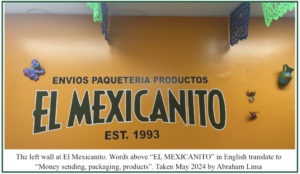
“I don’t remember the year they opened, it was in the 90s. When I arrived [in 1988] after a few years, the first Mexican restaurant that opened was La Poblanita and La Flor de Mexico Bakery, then El Mexicanito [Grocery], and then later La Guelaguetza [Grocery] and Garibaldi.”

Fernando Casiano, remembers that in those days, “The famous street was Maplewood. Those areas were well known to the Mexican.”
PREVIEW OF NEXT ARTICLE:
“When the Aztec Eagle Began Her Soar Over Bridgeport: Part 3 – Men of Maplewood”
In the year 1990, there were no Mexican-run businesses in Bridgeport, no restaurants or grocery stores…
Mexican businesses opened in town starting in the early 1990s, clustering on one intersection…
Bibliography:
SMITH, ROBERT COURTNEY. Mexican New York: Transnational Lives of New Immigrants. 1st ed. University of California Press, 2006.
Sontag, Deborah. “A Mexican Town That Transcends All Borders.” The New York Times, July 21, 1998.
Regatao, Gisele. “Viva Poblanos.” Newsday (Melville, NY), May 21, 2001. Accessed June 25, 2024 https://www.newspapers.com/image/714549426/?match=1&terms=Maurilia%20Arriaga.
Jk Macedo, Emilio, (2016), “Los niños Dios migrantes” El mercado de la nostalgia en Piaxtla, Puebla, ¿Una oportunidad para el desarrollo de la economía regional?. En memorias del Quinto congreso Nacional de ciencias Sociales, Eje 5: Migración: Desafíos finales y escenarios futuros, Congreso celebrado en Guadalajara, México. ISBN: 978-0692664933.
Reyes Razo, Miguel. “Un Poblano Que Triunfa en Nueva York.” El Universal. Last modified February 9, 2002. https://archivo.eluniversal.com.mx/nacion/78945.html.
Richardson, Lynda. “This Road to New Rochelle Begins in the Hills of Mexico.” The New York Times, July 7, 1992.
Pica, Tom. “Port Chester Aliens Live Lives of Hardship.” Daily Item (Port Chester, NY), January 11, 1974.
Kinnie, Ronald L. “5,000-plus Illegal Aliens Seen Seeking or Filling State Jobs.” Bridgeport Post (CT), February 8, 1975 edition.
Connecticut Department of Health. Connecticut Death Index, 1949-2012 [database on-line]. Provo, UT, USA: Ancestry.com Operations, Inc., 2003. Original data: Connecticut Department of Health. Connecticut Death Index, 1949-2001. Hartford, CT, USA: Connecticut Department of Health.
Ancestry.com. U.S., Social Security Applications and Claims Index, 1936-2007 [database on-line]. Provo, UT, USA: Ancestry.com Operations, Inc., 2015. Original data: Social Security Applications and Claims, 1936-2007.
Ancestry.com. U.S., Social Security Death Index, 1935-2014 [database on-line]. Provo, UT, USA: Ancestry.com Operations Inc, 2014. Original data: Social Security Administration. Social Security Death Index, Master File. Social Security Administration.
Ancestry.com. U.S., City Directories, 1822-1995[database on-line]. Lehi, UT, USA: Ancestry.com Operations, Inc., 2011.
Connecticut State Department of Health; Hartford, CT; Connecticut Vital Records — Index of Marriages, 1897-1968
Walsh, Charles. “Deadly Lunch Causes Nutriment Flashbacks.” Guest Columnist, Thoughts From Other Writers. Newark Advocate (OH), August 6, 1994.
Bridgeport Post (CT). “Chavez Pushes Boycott During Busy Day Here.” August 1, 1974.
Dorso, Janet. Bridgeport Post (CT). “International Folk Festival for June 18/19 at Fairfield U.” June 14, 1977. https://www.newspapers.com/image/60270273/.
Maria Eugenia D’Aubeterre Buznego and Leticia Rivermar Pérez, « Tres circuitos migratorios Puebla-Estados Unidos: una lectura comparativa », Nuevo Mundo Mundos Nuevos [URL : http://journals.openedition.org/nuevomundo/10413 ; DOI https://doi.org/10.4000/nuevomundo.10413
Federal Reserve Bank of St Louis. Federal Reserve History. Last modified November 22, 2013. Accessed February 10, 2024. https://www.federalreservehistory.org/essays/latin-american-debt-crisis.
Piascik, Andy. “Solidarity Bridgeport Style.” Bridgeport History Center. https://bportlibrary.org/hc/
Vision Government Solutions. Street Listing- MAPLEWOOD AV. Bridgeport, CT Vision Government Solutions. Accessed June 27, 2024. https://gis.vgsi.com/bridgeportct/Streets.aspx?Name=MAPLEWOOD%20AV
Reilly, Genevieve. “Sudden Closing of Popular Fairfield Diner Comes as Surprise.” Connecticut Post (Bridgeport, CT), June 18, 2018. Accessed August 19, 2024. https://www.ctinsider.com/news/article/Sudden-closing-of-popular-Fairfield-diner-comes-13005449.php.
Connecticut Post (Bridgeport, CT). “Petros Roussas.” April 2012. https://www.legacy.com/us/obituaries/ctpost/name/petros-roussas-obituary?id=19451764
Connecticut Post (Bridgeport, CT). “Victor Hasiotis.” August 2003. https://www.legacy.com/us/obituaries/ctpost/name/victor-hasiotis-obituary?id=27696918
Connecticut Post (Bridgeport, CT). “Stergios Koutikas.” September 2007. https://www.legacy.com/us/obituaries/ctpost/name/stergios-koutkas-obituary?id=24796855.
Connecticut Post (Bridgeport, CT). “Fani Loukrezis.” 2023.
https://www.legacy.com/us/obituaries/ctpost/name/fani-loukrezis-obituary?id=38582130.
Congress.gov. “S.1200 – 99th Congress (1985-1986): Immigration Reform and Control Act of 1986.” 11/6/1986. https://www.congress.gov/bill/99th-congress/senate-bill/1200.
Connecticut. Bridgeport. 1910 U.S. census, Supplements for Connecticut. IPUMS. https://usa.ipums.org/usa/resources/voliii/pubdocs/1910/States/41033935v1-8ch6.pdf
Anderson, Jayla. “In His Painting, A Bridge From Oaxaca To New Haven.” Arts Council of Greater New Haven. Last modified April 22, 2022. https://www.newhavenarts.org/arts-paper/articles/art-builds-a-bridge-from-oaxaca-to-new-haven
Endangered Language Alliance. “Zapotec.” NYC Language Map. https://languagemap.nyc/Explore/Language/Zapotec/1249.
Vasquez, Daniel W., “Latinos in Bridgeport, Connecticut” (2003). Gastón Institute Publications. 61. https://scholarworks.umb.edu/gaston_pubs/61
Mountz, Alison, and Richard A. Wright. “Daily Life in the Transnational Migrant Community of San Agustín, Oaxaca, and Poughkeepsie, New York.” Diaspora: A Journal of Transnational Studies 5, no. 3 (1996): 403-428. https://doi.org/10.1353/dsp.1996.0017.
“Our History.” AmFab Studios. Accessed February 11, 2024.
U.S. Census Bureau (1990). New York General Population Characteristics, 1990 Census of Population. Retrieved from https://usa.ipums.org/usa/resources/voliii/pubdocs/1990/cp1/cp-1-34-1.pdf
U.S. Census Bureau (1990). Connecticut General Population Characteristics, 1990 Census of Populatio. Retrieved from https://usa.ipums.org/usa/resources/voliii/pubdocs/1990/cp1/cp-1-8.pdf
Martino-Velez, Leslie. Indigenous Mexicans in New York City: Immigrant Integration, Indigenous Mexicans in New York City: Immigrant Integration, Language Use, and Identity Formation. CUNY Academic Works, 2022. https://academicworks.cuny.edu/cgi/viewcontent.cgi?article=5760&context=gc_etds
Bridgeport Post (Bridgeport, CT). “Notice – Liquor Permit for Casa Grande.” Advertisement. August 14, 1976. https://www.newspapers.com/image/60631351/?match=1&terms=%22280%20Noble%22.
Bridgeport Post (Bridgeport, CT). “Spanish Merchants Seek Chamber Ties.” Accessed April 14, 1977. https://www.newspapers.com/image/60231321/.
“Ancestry Multimap.” Cinyc Maps. Last modified September 23, 2023. https://cinycmaps.com/index.php/ancestry-2013-17/ancestry-multimap
Latino Oral History Project of Rhode Island. “Mexicans in Rhode Island.” Nuestras Raíces.
https://nuestrasraicesri.net/MexicansinRhodeIsland3.html.
Geller, Herbert F. “Continued Flow of Immigrants Pour into Area.” Bridgeport Post (Bridgeport,